We’re All Going to the World’s Fair
Mental health themes and content that may disturb Rated on: 08 April 2022
What’s it about?
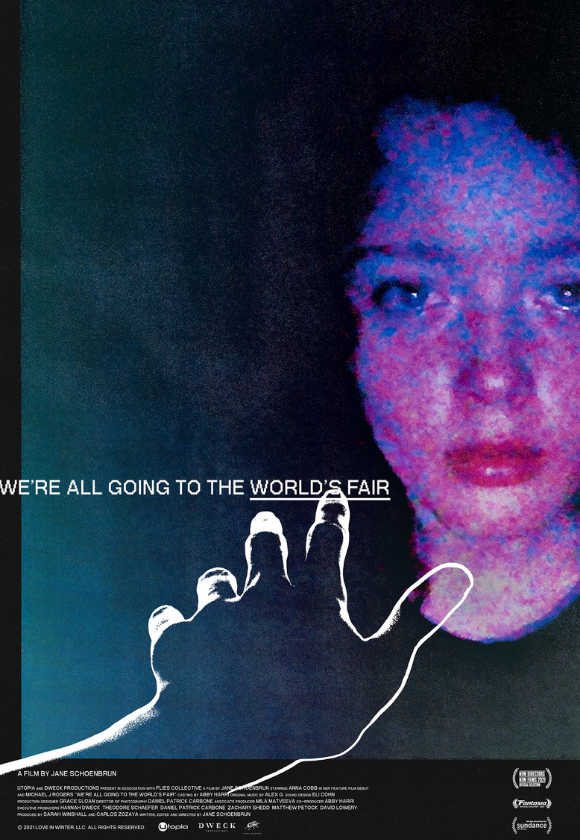
Casey starts playing the ‘World’s Fair Challenge’, an online horror role-playing game that is said to transform people’s bodies in monstrous ways and unleash their dreams. As part of the game, Casey makes a series of video logs documenting how the game is affecting her, and her ‘symptoms’.
The facts
- Showed at the 2021 Sundance Film Festival
- Runtime: 86 minutes
Why did it get this rating?
Horror
The film has an uneasy atmosphere and contains moments of body horror. Much of the film’s ‘action’ is conveyed through the video logs of people playing the horror game, with music occasionally generating a sense of threat.
Some of Casey’s vlogs involve self-harm, ranging from stabbing the tip of her finger with a pin to fantasy self-harm where a person pulls a roll of tickets out of his arm.
Mental health themes and suicide references
The main sense of horror comes from the blurring of fiction and reality. Casey makes comments about needing to kill her father because of the game or, instead, kill herself. This creates a tension as it is unclear whether Casey still knows what is real and what isn’t.
Casey’s behaviour has the potential to adversely affect children’s developing attitudes to mental health and suicidal ideation by presenting these ideas as ‘just a game’.
There is a general sense of psychological unease created by the use of horror and mental health themes in the film that may disturb some vulnerable viewers.
Recent featured decisions

Sexual material, sexual violence & offensive language
After twenty years spent “chillin’, tokin’ and bonin’”, Ali G is shocked to discover that his long-term girlfriend, Julie, is 8 months pregnant. Faced with an extra mouth to feed, he heads to America to reclaim his former glory… but soon encounters adversaries who will ultimately threaten his and his child’s very existence.

Nobody Wants This, Season 3
Season 3
Offensive language and sexual themes
Joanne and Noah are living together in the third season of Nobody Wants This, and their family members are also dealing with relationship developments that test them.